


Play Based Learning Center for Fun and Effective Early Education
- fariha246
- 8 hours ago
- 5 min read

Early childhood education has evolved significantly over the years, with educators and parents increasingly recognizing the value of engaging, child-centered learning approaches. One of the most effective methods for nurturing young minds is through a play based learning center. These centers combine education and play, creating an environment where children develop essential skills while enjoying meaningful experiences.
Rather than relying solely on traditional teaching methods, a play based learning center encourages exploration, creativity, and hands-on activities. Children learn naturally through play, making the educational process more enjoyable and effective. This approach not only supports academic growth but also fosters social, emotional, and physical development.
What Is a Play Based Learning Center?
A play based learning center is an educational environment designed to promote learning through structured and unstructured play activities. Instead of focusing primarily on worksheets and formal instruction, these centers provide opportunities for children to explore, experiment, and discover concepts through interactive experiences.
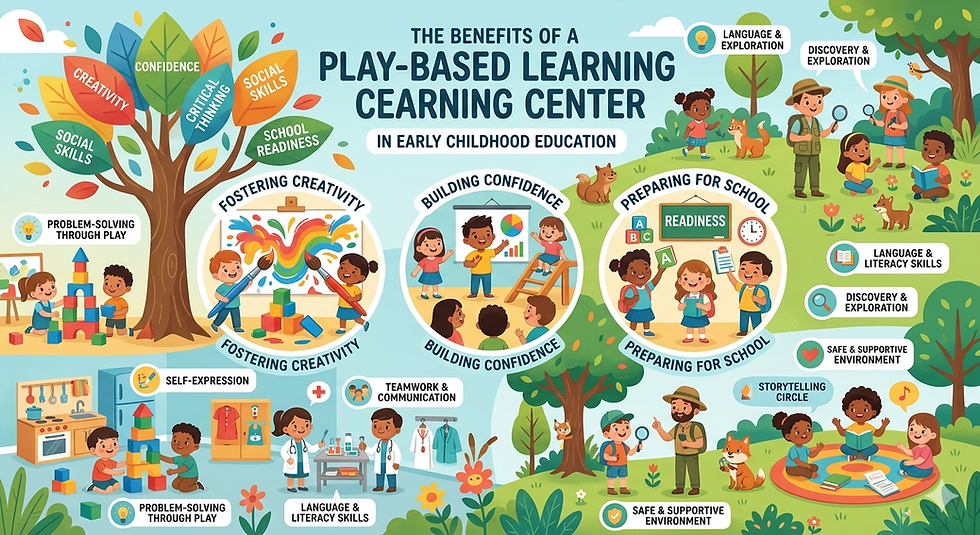
In a play based setting, children engage in activities such as building blocks, role-playing, art projects, sensory exploration, storytelling, and outdoor play. Each activity is carefully planned to support developmental milestones and learning objectives while allowing children the freedom to make choices and express themselves.
Educators in these centers act as guides and facilitators, helping children build knowledge through meaningful interactions rather than direct instruction alone.
Why Play Is Essential for Early Childhood Development
Play is often viewed as a simple pastime, but it is actually one of the most powerful tools for learning. Research has shown that children learn best when they are actively engaged and emotionally connected to what they are doing.
A play based learning center provides opportunities for children to:
Develop problem-solving skills
Improve communication and language abilities
Enhance creativity and imagination
Build confidence and independence
Learn teamwork and cooperation
Strengthen fine and gross motor skills
Develop emotional regulation
Through play, children naturally practice decision-making, critical thinking, and social interaction. These skills form the foundation for lifelong learning and success.
Benefits of a Play Based Learning Center
Encourages Active Learning
Children learn more effectively when they are actively involved in the learning process. A play based learning center creates opportunities for hands-on experiences that stimulate curiosity and engagement.
For example, children can learn basic math concepts by sorting objects, counting blocks, or measuring ingredients during pretend cooking activities. These experiences make learning meaningful and memorable.
Supports Social and Emotional Growth
Social skills are essential for success in school and life. In a play based environment, children interact with peers, share materials, negotiate roles, and resolve conflicts.
These interactions help children develop:
Empathy
Cooperation
Patience
Respect for others
Emotional awareness
As children learn to work together and communicate effectively, they build healthy relationships and gain confidence in social situations.
Promotes Creativity and Imagination
A key advantage of a play based learning center is its ability to nurture creativity. Open-ended activities encourage children to think outside the box and explore new ideas.
Whether they are pretending to run a grocery store, building a castle, or creating artwork, children learn to use their imagination and develop innovative thinking skills.
Creativity not only enriches childhood experiences but also contributes to future problem-solving abilities and adaptability.
Builds Strong Language Skills
Language development occurs naturally during play. Children engage in conversations, ask questions, describe experiences, and tell stories.
Teachers in a play based learning center support language growth by introducing new vocabulary, encouraging discussions, and reading books that connect with children's interests.
As a result, children develop stronger speaking, listening, reading, and comprehension skills.
Enhances Physical Development
Physical activity is an important component of early education. Through outdoor play, climbing, running, dancing, and hands-on activities, children improve their coordination and motor skills.
A quality play based learning center provides opportunities for both fine motor development, such as drawing and cutting, and gross motor development through active movement and play.
Key Features of a Quality Play Based Learning Center
Not all educational programs are the same. When choosing a play based learning center, parents should look for certain characteristics that support effective learning and development.
Child-Centered Curriculum
The curriculum should be designed around children's interests, needs, and developmental stages. Activities should encourage exploration and discovery rather than rigid instruction.
Safe and Stimulating Environment
A welcoming and secure environment allows children to feel comfortable and confident. Learning spaces should be organized, engaging, and filled with age-appropriate materials that inspire curiosity.
Qualified Educators
Experienced teachers understand how to facilitate play while supporting educational goals. They observe children's interests, ask thoughtful questions, and guide learning experiences without taking control of the play.
Variety of Learning Opportunities
A strong play based learning center offers diverse activities, including:
Creative arts
Science exploration
Sensory play
Music and movement
Outdoor learning
Literacy activities
Dramatic play
This variety ensures that children develop skills across multiple areas.
How Play-Based Learning Prepares Children for School
Some parents worry that play-based programs may not adequately prepare children for academic success. However, studies consistently show that children who participate in play-based education often enter school with strong foundational skills.
A play based learning center helps children develop:
Early literacy skills
Number recognition
Problem-solving abilities
Self-regulation
Attention and focus
Positive learning attitudes
Rather than memorizing facts, children learn how to think, explore, and adapt. These skills are essential for success in kindergarten and beyond.
Children who enjoy learning from an early age are more likely to remain motivated and engaged throughout their educational journey.
The Role of Parents in Play-Based Learning
Parents play a crucial role in supporting the benefits of a play based learning center. By extending learning experiences at home, families can reinforce important developmental skills.
Simple activities such as reading together, building with blocks, drawing, cooking, and outdoor exploration can complement classroom learning.
Parents can also support their children's development by:
Encouraging curiosity
Asking open-ended questions
Allowing time for free play
Celebrating creativity
Participating in imaginative activities
When parents and educators work together, children receive consistent support that enhances their overall growth and development.
Why More Families Are Choosing Play-Based Education
Modern parents are increasingly seeking educational programs that prioritize holistic child development. A play based learning center offers a balanced approach that addresses academic, social, emotional, and physical growth.
Unlike highly structured programs that focus primarily on academic achievement, play-based learning recognizes that children learn best through meaningful experiences. It allows children to develop essential life skills while maintaining a love for learning.
This approach aligns with current research on child development and reflects a growing understanding of how young children naturally acquire knowledge and skills.
Conclusion
A play based learning center provides an engaging and effective approach to early childhood education. By combining fun with purposeful learning, these centers help children develop critical cognitive, social, emotional, and physical skills.
Through hands-on experiences, creative exploration, and meaningful interactions, children gain the confidence and abilities needed for future success. Parents who choose a play based learning center are investing in an educational environment that values curiosity, imagination, and lifelong learning.
As the importance of child-centered education continues to grow, play-based learning remains one of the most effective ways to nurture happy, capable, and confident young learners.
FAQs
What is a play based learning center?
A play based learning center is an educational environment where children learn through play, exploration, and hands-on activities.
What age is suitable for a play based learning center?
Most play based learning centers welcome children from infancy through preschool age, depending on the program.
How does play-based learning help children?
It helps children develop social, emotional, cognitive, language, and motor skills in a fun and engaging way.
Is play-based learning effective for school readiness?
Yes, it builds important skills such as problem-solving, communication, creativity, and early literacy that support school success.
What activities are offered in a play based learning center?
Common activities include arts and crafts, storytelling, sensory play, block building, music, outdoor play, and role-playing games.


Comments