


How Children Develop Problem-Solving Skills Through Play: A Guide for Parents
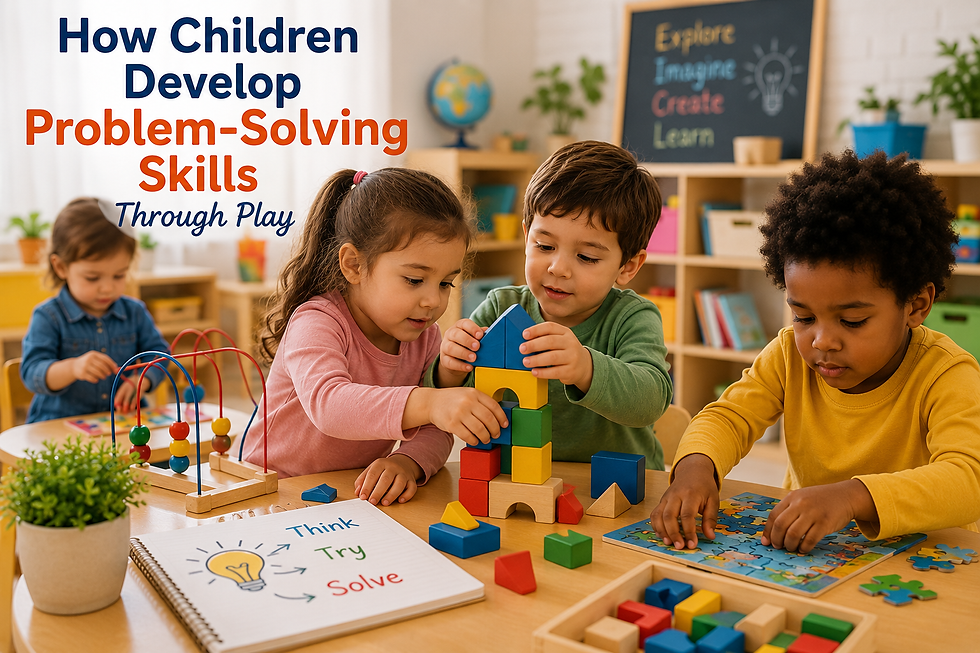
When children build towers with blocks, solve puzzles, pretend to run a grocery store, or figure out how to share toys with friends, they're doing much more than playing. They're developing essential problem-solving skills that will support them throughout school and later in life.
Problem-solving is one of the most valuable life skills a child can develop. It encourages independent thinking, creativity, confidence, and resilience. Instead of simply giving children the answers, high-quality early childhood programs create opportunities for them to explore, experiment, and learn through experience.
At Little Learners Academy, we believe that play is one of the most powerful ways children learn. Every activity is designed to inspire curiosity, encourage critical thinking, and help children discover solutions on their own. If you've been searching for a trusted daycare near me, understanding how play supports brain development can help you make an informed decision for your child's future.
Why Problem-Solving Skills Matter in Early Childhood
Problem-solving begins long before children enter elementary school. Every time a child encounters a challenge and works through it, they strengthen important cognitive and social abilities.
These skills help children:
Think independently.
Make thoughtful decisions.
Adapt to new situations.
Build confidence.
Strengthen communication.
Improve creativity.
Develop perseverance.
Children who practice solving everyday problems become more confident learners because they understand that mistakes are opportunities to learn rather than reasons to give up.
How Play Naturally Encourages Problem-Solving
Unlike worksheets or memorization, play allows children to discover answers through exploration.
During play, children ask questions such as:
What happens if I stack one more block?
How can I make this puzzle fit?
Which piece belongs here?
How do I build a stronger tower?
What should I do if my friend wants the same toy?
Each question encourages children to observe, think, test ideas, and adjust their approach until they find a solution.
These experiences build flexible thinking that continues to benefit children throughout their education.
Building Confidence Through Trial and Error
One of the greatest benefits of play is that children learn it's okay to make mistakes.
When a tower falls over, children don't usually stop playing. Instead, they rebuild it.
When a puzzle piece doesn't fit, they try another one.
This process teaches children:
Patience.
Persistence.
Adaptability.
Confidence.
Logical thinking.
Rather than fearing failure, they begin viewing challenges as exciting opportunities to learn something new.
Types of Play That Strengthen Problem-Solving Skills
Building and Construction Play
Building with blocks, magnetic tiles, or construction toys encourages children to think critically.
As they build, they begin asking questions like:
How can I make this taller?
Why did it fall?
Which blocks work best?
These simple experiences introduce concepts such as balance, engineering, measurement, and planning.
Children also develop spatial awareness and hand-eye coordination while creating their own structures.
Puzzle Activities
Puzzles teach children to observe details and recognize patterns.
As they search for matching pieces, children learn to:
Compare shapes.
Identify similarities.
Think logically.
Stay focused.
Solve challenges independently.
Completing a puzzle also gives children a strong sense of accomplishment that motivates them to tackle new challenges.
Pretend Play
Imaginative play encourages children to solve problems that don't have one right answer.
For example, children pretending to run a restaurant may need to:
Decide who prepares food.
Take customer orders.
Share pretend money.
Solve disagreements.
Organize supplies.
These situations strengthen creativity, communication, cooperation, and decision-making.
Outdoor Exploration
Nature provides endless opportunities for children to investigate and solve problems.
Outside, children may wonder:
Which path should we take?
How can we build a bridge across the sandbox?
What happens when we mix water and dirt?
How can we move this large stick?
Outdoor play encourages observation, experimentation, and teamwork while supporting physical development.
Art and Creative Projects
Creative activities allow children to make decisions without fear of making mistakes.
While painting, drawing, or building crafts, children choose:
Colors.
Materials.
Shapes.
Designs.
Techniques.
These decisions strengthen creative thinking while encouraging children to explore different solutions independently.
Learning to Solve Social Problems
Problem-solving isn't limited to academic tasks.
Young children regularly encounter social situations that require thoughtful decision-making.
For example:
Two children want the same toy.
A friend feels upset.
Someone accidentally knocks over a block tower.
A game needs new rules.
Teachers guide children by asking questions rather than immediately solving the problem for them.
Questions like:
"What do you think we could do?"
"How can we help your friend?"
"Can you think of another way?"
These conversations help children develop empathy, communication, and conflict-resolution skills.
The Teacher's Role in Developing Critical Thinkers
Effective teachers don't simply provide answers.
Instead, they encourage children to:
Ask questions.
Make predictions.
Test ideas.
Reflect on outcomes.
Try different solutions.
At Little Learners Academy, our educators create engaging learning experiences where children are encouraged to think independently while knowing they have caring adults ready to guide and support them.
Encouraging Problem-Solving at Home
The learning that happens at daycare can continue at home through simple, everyday activities. Parents don't need expensive educational toys to help children become confident problem solvers. Everyday moments often provide the best opportunities for learning.
Let Your Child Make Simple Choices
Giving children age-appropriate choices encourages independent thinking.
For example, ask:
Which shirt would you like to wear today?
Should we read this book or that one?
Would you like apple slices or bananas for your snack?
Making decisions helps children understand that their choices matter while building confidence in their ability to solve small problems.
Allow Safe Mistakes
It can be tempting to step in whenever your child struggles, but allowing them time to figure things out builds resilience.
If they're trying to zip a jacket, build a tower, or complete a puzzle, give them encouragement rather than immediately doing it for them.
You might say:
"You're working really hard."
"What could you try next?"
"I believe you'll figure it out."
This teaches perseverance and patience.
Read Books That Encourage Thinking
Stories naturally introduce children to problems and solutions.
After reading together, ask open-ended questions such as:
What would you have done?
Why do you think the character made that choice?
Can you think of another solution?
These conversations strengthen reasoning and communication skills.
STEM Activities That Build Critical Thinking
Many STEM (Science, Technology, Engineering, and Math) activities begin with simple play.
Examples include:
Building bridges with blocks.
Sorting objects by color or size.
Making paper airplanes.
Mixing water with sand.
Planting seeds and watching them grow.
Creating simple ramps for toy cars.
Children naturally begin asking questions, making predictions, and testing ideas—all important parts of problem-solving.
At Little Learners Academy, STEM-inspired activities are introduced in fun, age-appropriate ways that encourage curiosity and exploration.
Social Play Builds Everyday Problem Solvers
Children don't only solve physical problems—they also learn how to solve social challenges.
Playing with classmates teaches children how to:
Share materials.
Wait patiently for their turn.
Work together on group projects.
Respect different ideas.
Express emotions appropriately.
Resolve disagreements peacefully.
These experiences help children develop emotional intelligence alongside critical thinking.
Why Independent Thinking Is So Important
Children who are encouraged to think independently often become more confident learners.
Instead of waiting for adults to provide answers, they begin asking questions, exploring possibilities, and trying different approaches.
Independent thinkers often become children who:
Enjoy learning.
Adapt to change.
Stay calm when facing challenges.
Believe in their abilities.
Continue trying even when something feels difficult.
These qualities support success not only in school but throughout life.
How Little Learners Academy Supports Problem-Solving Through Play
At Little Learners Academy, we understand that every child learns differently. That's why our classrooms are designed to encourage exploration, creativity, and independent thinking every day.
Our play-based curriculum includes:
Hands-on learning centers.
Building and construction activities.
Sensory exploration.
Art and creative expression.
Music and movement.
Outdoor discovery.
Science exploration.
Cooperative group play.
Storytelling and dramatic play.
Age-appropriate STEM experiences.
Our experienced educators guide children by asking thoughtful questions, encouraging exploration, and celebrating effort rather than simply providing answers.
For families searching online for a trusted daycare near me, our nurturing environment helps children develop the confidence and critical thinking skills they'll use throughout their lives.
Frequently Asked Questions
At what age do children begin developing problem-solving skills?
Problem-solving begins during infancy as children explore their environment. Toddlers and preschoolers continue developing these skills through everyday play, exploration, and social interactions.
Why is play better than worksheets for young children?
Play encourages creativity, curiosity, communication, and independent thinking. Instead of memorizing answers, children actively explore solutions, making learning more meaningful and enjoyable.
What toys encourage problem-solving?
Excellent choices include:
Building blocks
Wooden puzzles
Shape sorters
Magnetic tiles
Pretend play sets
Art supplies
Construction toys
STEM learning kits
Simple, open-ended toys often provide the greatest opportunities for creative thinking.
How can parents support problem-solving at home?
Parents can encourage problem-solving by asking open-ended questions, allowing children to make decisions, reading together, building with blocks, completing puzzles, and giving children time to work through challenges independently.
Why should I choose a play-based daycare?
Play-based learning helps children develop social, emotional, physical, and cognitive skills naturally. It encourages creativity, builds confidence, and prepares children for future academic success in an engaging and age-appropriate way.
Why Families Choose Little Learners Academy
Choosing the right early learning environment is one of the most important decisions parents make.
Families choose Little Learners Academy because we provide:
Caring and experienced educators.
Safe and engaging classrooms.
Play-based learning programs.
Individual attention for every child.
Hands-on educational experiences.
Strong communication with families.
A nurturing environment that supports every stage of development.
If you've been searching for a reliable daycare near me, our programs are designed to help children grow academically, socially, emotionally, and creatively through meaningful play.


Comments